DnD Projects
Narrative/Quest Design Showcase
This is a showcase of my principles for preparing and running DnD adventures in my homebrew world. I believe a lot of what I learned from these projects carries over to narrative and quest design in video game development, for which reason I wanted to go through them on this page.
Learnings and Principles

What I learned from 5 Campaigns
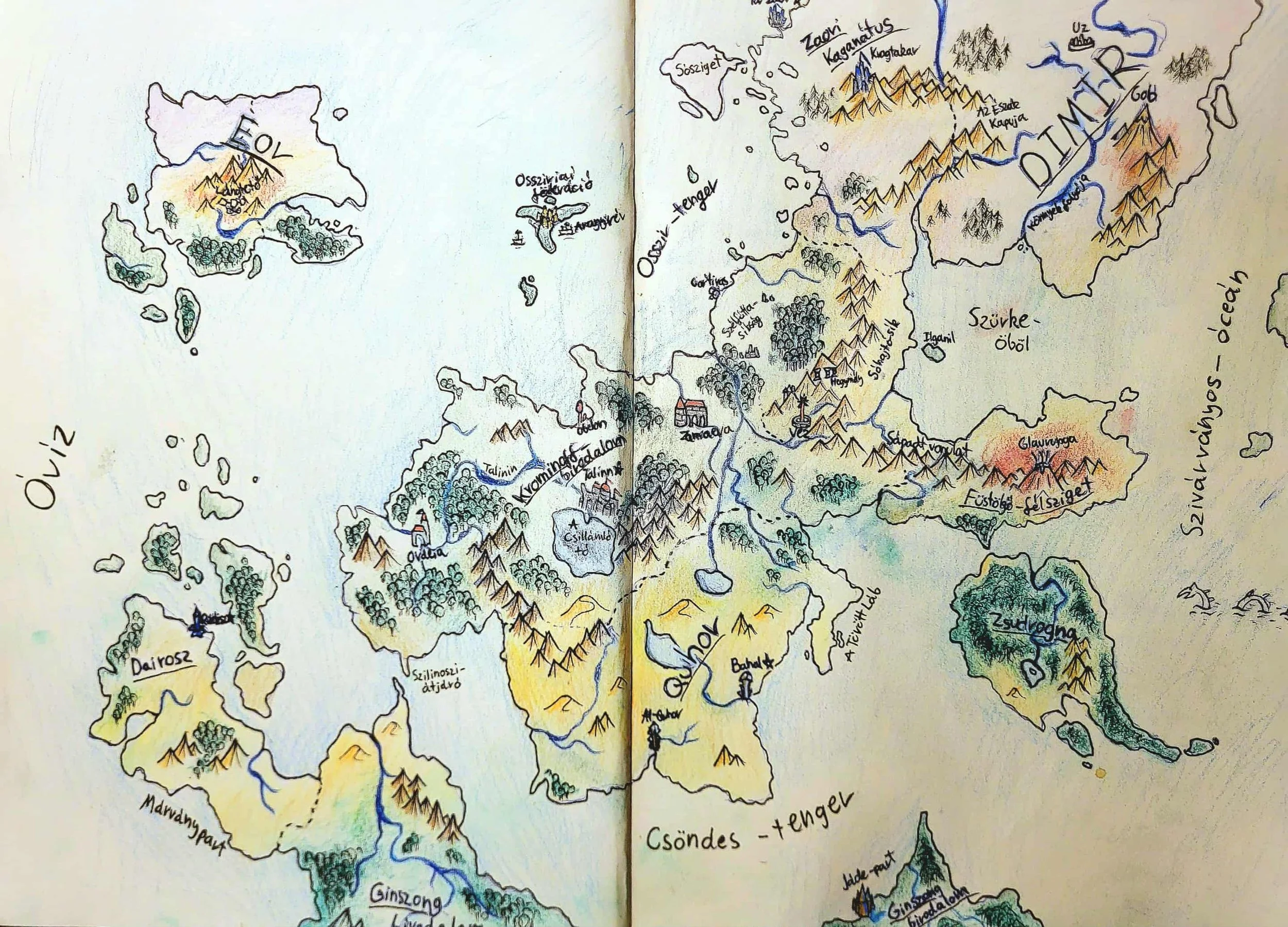
Homebrew World


I have run 5 different campaigns in my own DnD world in different locations and questlines, focusing on different flavours and settings from deep psychedelic desert, through undead robot-infested ruins to infiltrating a walking fortress of a hivemind empire. All of these projects taught me more about storytelling and RPG design in different ways, including:
how to make the players care about the characters and their objective
how to introduce and build NPCs that the players feel connected to and who drive the story forward
how to create mystery and story hooks that the players are intrigued by
how to create meaningful player choices in an interactive storyline without “railroading”
when and how to use “railroading” to hit certain plot beats for the benefit of the story and the players

Story/Dungeon structures
As a Game Master I found that to achieve a satisfying story that the players find enjoyable certain story structure principles and ideas help a lot with constructing quests and dungeon layouts.
Promise, Progress, Payoff
For adventures constrained to a limited length or self-contained dungeons it is important to achieve a satisfying progression and pacing of the quest as the players are moving through the dungeon. Using the 4-step Level Design process (Introduction, Development, Twist, Conclusion) as well as the principles of Promise, Progress and Payoff has been essential in creating fun dungeons:
Promise: How the objective is introduced and what “promises” the DM makes to the players - an imposing fortress in the distance or an unrevealed mystery are both promises to the players that they will get to unveil what is hidden
Progress: It is important the players feel that they are progressing towards what was promised to them. Whether that is getting closer physically to the destination or more clues in the mystery being revealed, this is what gives the satisfying feeling of progress towards their objective to the players
Payoff: What was promised to the players as something mysterious and interesting must be grandly revealed to the/conquered by the players so the story can reach its satisfying conclusion without loose ends. Even better if some unexpected, but logical twist was involved.
Fortress Infiltration Adventure Layout
Ruined City Dungeon Layout
Design example: Fortress Infiltration
In this short adventure the players had to infiltrate an enemy fortress built on top of a giant moving beast in order to save their homeland from destruction. I designed the dungeon layout as well as the enemy faction to provide an increasing challenge and gradual unveiling of the mystery of where this hivemind-empire draws its power from, “promising” the players to (quite literally) eventually get to the core of the mystery.
Layers of the social order of the enemy faction
Layers - building tension
The enemy empire is built on a rigid caste system where different social castes - the bronze, the silver and the gold caste - have both higher social status as well as different physical and magical attributes. This worldbuilding concept is represented in the mechanics of the mission with the fortress layers housing the different bronze/silver/gold castes and provides an increasingly difficult and varied challenge and drama to the players as the chances of getting caught rises ever more as they move deeper to sneak amongst higher level enemies while more information is being revealed on the potential weakpoints of the enemy that the players could exploit. This gives a sense of progress both in dungeon and story to players.
My planning for the layered fortress layout
My planning for running the dungeon in the layered fortress
Resulting player experience
This design resulted in a really tense experience and a very enjoyable conclusion to the story for the players where, through clever problem-solving, they could both break the brainwashing of the evil empire and save their homeland. This satisfied all of the promises given to the players through the adventure.
Quests for the players
A collaborative storytelling process
The most important thing to realize as a Dungeon Master for me was that I am not really “telling a story”, but creating a world where your players can live out their own adventures.
I found that the best way to make the players care about the world they are playing in is to build on and connect the world to the players’ movitations coming from their character backstories. This way it doesn’t feel like they are just dropped into a world they have no connections to, but that they have a history and strong ties to the characters they are meeting and the goals they are pursuing.
Collaboratively constructing my games with my players has taught me a lot about communication with your players and their player experience.
Plot web connecting the player characters with the other elements of the story for “The Lost City”
Resulting player experience
I made the mistake before in other campaigns I ran that one of the players’ backstory really inspired me to build the story, but neglected another’s, which ended up resulting in them feeling that they did not have a lot of connection to the story. In the campaign showcased above on the plot web I made sure to not make that mistake again and after asking for feedback the players reported that they felt that there was something interesting to pursue for each of them in this adventure, leaving them intrigued to find out more and progress the story.

Battlemaps
Story-driven interactive combat
Combat is where DnD gets the most systemic and game-y, but it has always been my aim for the combat to be driven more by the characters, the plot, the drama and the unique environment than the stats.
For this reason in all of my hand-made battlemaps you can find:
Homebrew interactables and mechanics that influence the fight in interesting ways and have an important connection to the story and mystery
Bosses/enemies that are integral parts of the story and have ties to player characters and their objective
Environmental elements/ingredients that encourage and reward creative player thinking and resourceful problem solving
Spider Lair with collectible weapons on the ceiling
Dark Temple with breakable architecture and other interactive elements
Town Square Layout with cover options

Adapting to Video Games
From tabletop to engine
As a Level Design/Narrative Design personal project I decided to adapt one of my DnD campaigns into a short adventure mod for Divinity Original Sin 2, an RPG by Larian Studios.
Click the button below to check out the details!
Reflection on my DnD projects
I find DnD to be a creative hobby that makes me a better game designer, worldbuilder and writer every time I run a campaign. Each time I learn more about player psychology, what motivates the players, what creates memorable and meaningful experiences and how to construct good quests and dungeons.
Being a DM has also taught me a lot about communication and understanding what the players want, when they feel good about themselves and what they are doing and when not. Listening to the players is a core part of running these games and that skill has transferred over to my game design experience as well.
Experimentation with different objectives and settings has been a great learning experience for me. Designing challenges for stealth missions, exploration, dungeon crawl and other scenarios has helped in both my narrative design and level design skill development greatly.
Running these games brings me a lot of joy and fulfillment and I hope one day I can bring the experiences I create to larger audiences.